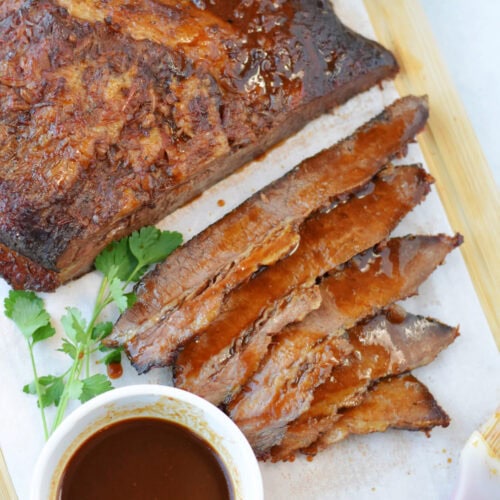
Brisket in the Electric Roaster
This foolproof beef Brisket in the Electric Roaster recipe slow-simmers a well-seasoned beef brisket in a savory, tomato-based sauce until tender.
Servings: 12 servings
Chef Alli
Save this Recipe
Ingredients
- 8-10 pound beef brisket flat Trimmed of excess fat by the butcher
- 1 tablespoon kosher salt May substitute 1 teaspoon table salt, if preferred, but I really recommend using kosher salt
- 2 teaspoons black pepper
- 3 cups beef broth I make my using Better Than Bouillon Beef Base Paste
- 12 ounce bottle tomato-based chili sauce, Such as Heinz, but use your favorite brand. May substitute 1 1/2 cups of ketchup combined with 1 tablespoon of cider vinegar.
- 1 ounce envelope Lipton Onion Soup Mix
- 1 cup packed brown sugar
Instructions
- Unwrap the brisket. Use your fingers to rub the salt and pepper all over the surface of the brisket on all sides. **Ideally, this step can be done up to 24 hours ahead of time to allow the brisket to season, but this requires planning ahead!8-10 pound beef brisket flat, 1 tablespoon kosher salt , 2 teaspoons black pepper
- Allow the seasoned brisket to rest, uncovered, at room temperature for 1 hour to allow the meat fibers to relax before cooking.
- Preheat a lightly greased electric roaster to 300 degrees F. Place the seasoned brisket into the prepared roaster, fat side up and meaty-side down. **I used an 18-quart electric roaster for this recipe. If you are using a larger electric roaster, you could likely fit and cook 2 brisket flats (8-10 pounds each) at the same time for a larger crowd.
- In a medium mixing bowl, prepare the sauce by whisking together the beef broth, chili sauce, onion soup mix, and brown sugar together.3 cups beef broth , 12 ounce bottle tomato-based chili sauce, , 1 cup packed brown sugar, 1 ounce envelope Lipton Onion Soup Mix
- Gently pour the prepared sauce mixture all around and over the beef brisket in the electric roaster.
- Bake, covered, for 8-10 hours or until the internal temperature of the meat is 200-208 degrees F. at the center when tested with an instant-read meat thermometer probe, and the meat is fork-tender.
- Turn off the electric roaster. Use two large meat/grilling spatulas to carefully lift and remove the brisket to a large cutting board. Tent the brisket with foil and allow it to rest and relax for 30 minutes while you finish the sauce.
- Allow the sauce to cool slightly, then pour it from the roaster into the strainer of a 6-cup fat separator pitcher. Wait a few minutes to allow the fats to separate and rise to the top - you will see a visible line were the fat ends and the sauce beneath begins.
- Once the fat layer is clearly on top, press the bottom release button of the fat separator so the sauce can escape into a bowl or saucepan. When most of the sauce is removed from the fat separator, quickly push the release button again to close it, leaving the fats to remain in the pitcher to be discarded.
- Untent the brisket, carving it across against the grain into 1/2-inch thick slices, or whatever thickness you prefer.**To carve across the grain of the meat, locate the parallel meat fibers that run the length of the brisket. Use a sharp carving knife to slice across them, preferably on the diagnonal, shortening the meat fibers as you slice for maximum tenderness.
- Return the brisket slices to the electric roaster set to the lowest temperature setting. Shingle the slices on top of each other across the bottom, then drizzle with some of the sauce as desired, or serve the sauce on the side. Cover the electric roaster to keep the brisket warm until ready to serve.
Notes
- I do not use the rack in the electric roaster when cooking brisket. I like the brisket to be fully down in the sauce while it is simmering so the meat can absorb all the flavors of the sauce as it cooks.
- If you have a dry rub or seasoning blend that you are especially partial to, you can absolutely substitute it in place of the salt and pepper in this recipe.
- Cooking the brisket in the electric roaster with the fat-side-up allows the fat to render down (into the meat) as it slowly simmers.
- If you want to make a bed of sliced onions over the bottom of the electric roaster before adding the seasoned brisket and sauce, you sure can and this will add an extra layer of flavor. However, keep in mind that you will have to strain these onions from the sauce before defatting it in the fat separator.
Nutrition
Calories: 598kcalCarbohydrates: 31gProtein: 64gFat: 23gSaturated Fat: 8gPolyunsaturated Fat: 1gMonounsaturated Fat: 11gCholesterol: 187mgSodium: 1039mgPotassium: 1201mgFiber: 1gSugar: 27gVitamin A: 193IUVitamin C: 6mgCalcium: 50mgIron: 6mg
Nutritional Disclaimer
Chef Alli is not a dietitian or nutritionist, and any nutritional information shared is an estimate.
Tried this recipe?Let us know how it was!