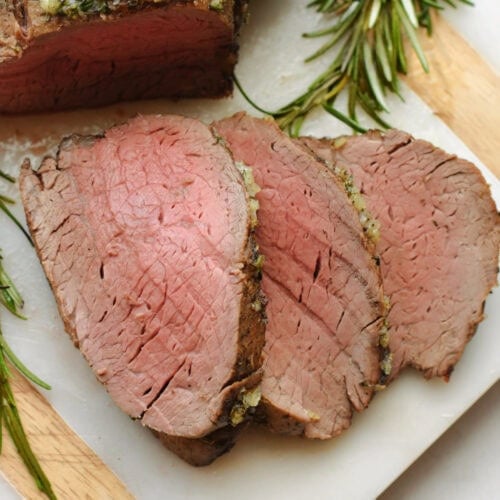
Roasted Beef Tenderloin
This easy-to-follow oven Roasted Beef Tenderloin recipe is seasoned to perfection, buttery in flavor, ultra-tender in texture, and perfectly seared to golden brown.
Servings: 8 servings
Chef Alli
Save this Recipe
Ingredients
Beef Tenderloin Roast
- 4 pound center-cut beef tenderloin roast
- 2 teaspoons kosher salt
- 1 teaspoon freshly ground black pepper
- 2-3 tablespoons olive oil
Garlic Herb Butter
- 6 tablespoons unsalted butter softened
- 6 cloves garlic minced, may substitute 1 tsp. granulated garlic
- 1 teaspoon finely chopped fresh rosemary leaves optional, may substitute 1/4 tsp. dried rosemary leaves
- 1 teaspoon finely chopped fresh thyme leaves optional, may substitute 1/4 tsp. dried thyme
Instructions
Prepare the Garlic Herb Butter
- In a small bowl, mix together the butter and garlic until smooth; fold in fresh herbs if using. Reserve the butter in the fridge.6 tablespoons unsalted butter, 6 cloves garlic, 1 teaspoon finely chopped fresh rosemary leaves, 1 teaspoon finely chopped fresh thyme leaves
Prepare the Beef Tenderloin
- Remove the beef tenderloin from the fridge and unwrap. Pat any excess moisture from the exterior of the roast, then season it on all sides with the salt and pepper.4 pound center-cut beef tenderloin roast, 2 teaspoons kosher salt, 1 teaspoon freshly ground black pepper
- Let the roast rest, uncovered, on the counter to come to room temperature prior to cooking, 2 - 2 1/2 hours.
- When the beef tenderloin is fully rested, preheat the oven to 450 degrees F.
- In a large heavy-bottomed skillet (I like to use my 13-inch Lodge cast iron skillet) over medium high heat, add a generous swish of olive oil.2-3 tablespoons olive oil
- When the oil is nicely hot and shimmering, place the seasoned tenderloin into the oil, meat-side down (fat-side facing up). Brown the tenderloin roast for a just few quick minutes on all sides until it is deep golden brown with a nice, crusty exterior.
- Slather the prepared butter mixture over the top side of the seared beef tenderloin, then place the skillet with the roast into the preheated oven on the center oven rack.
- Roast the beef tenderloin for 30 minutes at 450 degrees F.
- Reduce the oven temperature to 325 degrees F., continuing to cook the tenderloin for an additional 20-30 minutes at this lower temperature. At the 20 minute mark, use an instant-read meat thermometer probe to begin checking the internal temperature of the tenderloin to be sure it is on track for reaching 125 degrees F at the center.
- When the beef tenderloin reaches 125 degrees F. at the center, remove it from the oven. Cover the pan tightly with foil, letting the roast rest for 15-20 minutes, allowing the tenderloin to continue to raise in temperature at the center to 130-135 degrees F. for medium rare doneness. **Keep in mind that if the beef tenderloin rested properly at room temperature before you seared it and began the roasting process (as directed in Step 2), the tenderloin will only need approx. 12-13 minutes per pound of total cooking time. Beef cooks much more quickly if it is not ice cold when you begin the cooking process.
- Uncover the rested tenderloin and place it onto a large cutting board. Carve the tenderloin roast across the grain into thick slices.
Notes
- When cooking beef, I can think of nothing that is more important than rest before and after cooking, so please don't skip this step!! Beauty rest before you sear is essential because it helps the meat develop a good sear when it's closer to room temperature on the surface. Whereas an ice cold piece of meat does nothing but cool off the cooking surface immediately! Searing the tenderloin creates caramelization and that means FLAVOR. Allowing the beef tenderloin to rest after it cooks allows the protein fibers to relax so it's a tender and juicy eating experience.
- Using a meat thermometer is essential when cooking any type of meat or poultry.
Instead of cooking meat by minutes per pound or by guesswork, using an instant-read meat thermometer allows you to cook by the internal temperature. This will keep you from overcooking the beef tenderloin and this is very important for a good eating experience.
Nutrition
Calories: 734kcalCarbohydrates: 1gProtein: 42gFat: 62gSaturated Fat: 26gPolyunsaturated Fat: 3gMonounsaturated Fat: 26gTrans Fat: 0.3gCholesterol: 181mgSodium: 591mgPotassium: 717mgFiber: 0.4gSugar: 0.03gVitamin A: 313IUVitamin C: 2mgCalcium: 30mgIron: 6mg
Nutritional Disclaimer
Chef Alli is not a dietitian or nutritionist, and any nutritional information shared is an estimate.
Tried this recipe?Let us know how it was!