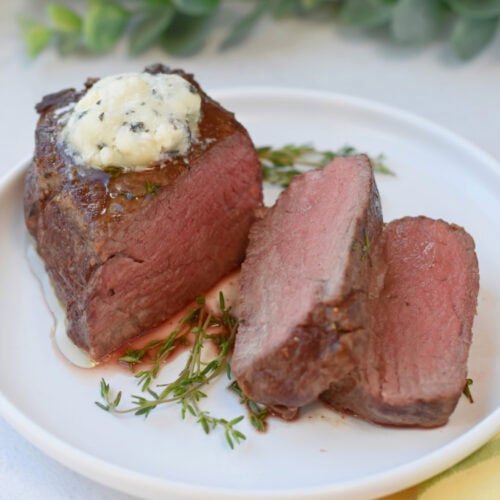
Filet Mignon in the Oven
Filet Mignon in the Oven is your fool-proof guide to restaurant-quality, tender, pan-seared, and oven-finished beef filet mignon steak.
Servings: 2 servings
Chef Alli
Save this Recipe
Ingredients
For the Filet Mignon Steaks
- 16 ounces filet mignon (beef tenderloin) steaks 2 filets, each one 1 1/2-inches thick
- 1 tablespoon canola or vegetable oil
- kosher salt and freshly ground black pepper for seasoning the fillets
- 2 tablespoons unsalted butter
- fresh thyme sprigs, may substitute fresh rosemary
Bleu Cheese Butter, optional
- 6 tablespoons unsalted butter
- ⅓ cup bleu cheese crumbles
- 1 tablespoon loosely packed chopped fresh thyme, may substitute rosemary, if preferred
Instructions
Make the Bleu Cheese Butter, Optional
- In a small bowl, gently combine the softened butter with the bleu cheese crumbles and the fresh herbs. Wrap the prepared butter in plastic wrap then use your hands to form and roll it into a log. Refrigerate until ready to use.6 tablespoons unsalted butter, ⅓ cup bleu cheese crumbles, 1 tablespoon loosely packed chopped fresh thyme, may substitute rosemary, if preferred
Prepare the Filet Mignon
- Allow the filets to rest, uncovered, at room temp for 60 minutes before starting the cooking process. **This resting time is key to making this recipe a success, so do not skip this.16 ounces filet mignon (beef tenderloin) steaks
- While the filets rest, pat each one dry on all sides with paper towels. Season very generously on all sides with kosher salt and freshly ground black pepper.kosher salt and freshly ground black pepper for seasoning the fillets
Cook the Filet Mignon
- When you're ready to cook the filets, preheat the oven to 450 degrees F.
- Preheat a 10-inch cast iron skillet over medium-high heat for 2-3 minutes until piping hot. Carefully add the oil as a hot skillet can cause splatters.1 tablespoon canola or vegetable oil
- When the oil is hot and shimmering, use a pair of long-handled tongs to carefully add the seasoned filets to the skillet.
- Pan-sear the fillets for 3 minutes on the first side, allowing the filet to build a deep golden brown crust, taking care not to move or turn the fillets during this time.
- Using the tongs once more, carefully flip the filets and sear for 3 minutes on the second side.
- Turn off the heat and add the butter to the skillet, along with the fresh thyme sprigs.2 tablespoons unsalted butter , fresh thyme sprigs, may substitute fresh rosemary
- Immediately transfer the skillet of steaks to the preheated oven. Cook the filets for 4-6 minutes for medium rare doneness. To check the internal temperature, insert an instant-read meat thermometer probe into the center of the filet. It should register 125-130 degrees at the center at this point, for a finished medium rare doneness. **Keep in mind that as the filets rest in the next step, they will continue to cook from residual heat.
- Remove the skillet from the oven; immediately spoon some of the pan sauces over the filets, then transfer them to a plateor cutting board and tent well with foil. Allow the filets to rest, covered, for 5-10 minutes, to finish cooking and to allow the protein fibers to relax. During this resting time, the steak juices will also redistribute themselves back into the center of the meat.
- Serve the filets topped with some of the bleu cheese butter, if using.Or, if preferred, slice each filet into medallions, shingling them one on top of the next on a serving plate, topped with bleu cheese crumbles. Drizzle with some of the warm pan juices and serve at once.
Notes
- Look for filet mignon steaks that are 1 1/2-inches to 2-inches thick, deep red in color, with modest marbling throughout. If you’re cooking two filets like this recipe calls for, make sure they are the same thickness so they cook evenly together.
- Be sure your filet mignon steaks are room temperature before searing them.Using a cast iron skillet to cook filets ensures they cook evenly and get a great sear on both sides. Always preheat your skillet before adding the filets to sear. When the filets hit that skillet, you should hear lots of great sizzle.
- Remove the steaks from the oven a few degrees before they’ve reached your final desired internal temperature and then let them rest. During this resting time, they will continue to rise in internal temperature due to residual heat.
- If you are wondering what the internal temperature of your filet mignon is, don’t guess. Instead use an instant-read meat thermometer. This will help to keep you from overcooking the filet mignon.
Nutrition
Calories: 817kcalCarbohydrates: 1gProtein: 55gFat: 65gSaturated Fat: 38gPolyunsaturated Fat: 2gMonounsaturated Fat: 19gTrans Fat: 2gCholesterol: 282mgSodium: 390mgPotassium: 874mgSugar: 0.2gVitamin A: 1571IUCalcium: 182mgIron: 4mg
Nutritional Disclaimer
Chef Alli is not a dietitian or nutritionist, and any nutritional information shared is an estimate.
Tried this recipe?Let us know how it was!